
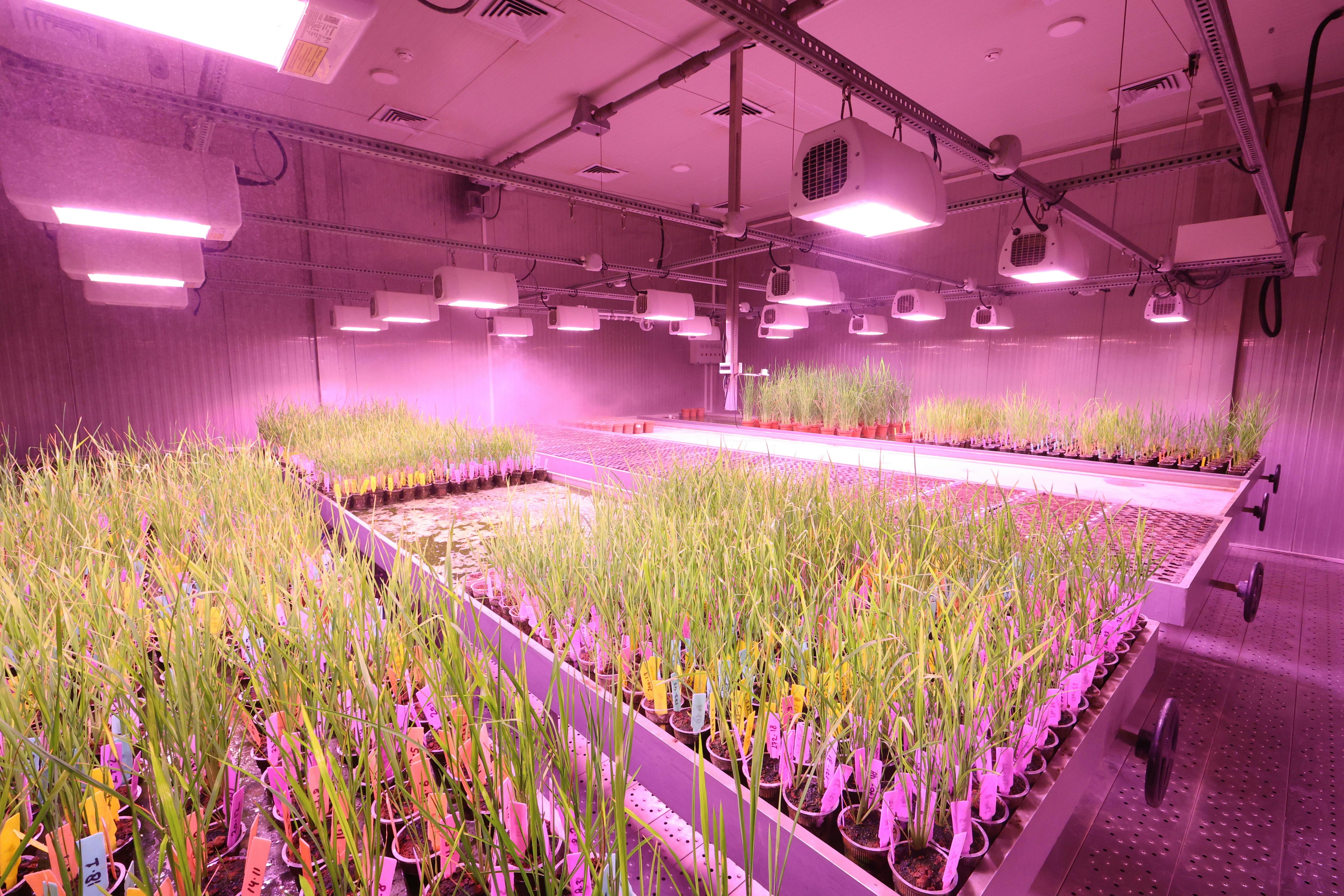
Choosing the right CO2 regulator is the difference between a grow room that hits its peak yield and one that bleeds gas straight out the exhaust. CO2 regulators meter compressed gas from a tank into your space, and pairing them with the right controller is what turns CO2 enrichment from a guess into a system you can trust.
Get the combination wrong and you waste fuel, miss your ppm targets, or, worse, create safety risks for anyone working in the space. In this guide, you will learn how CO2 regulators differ from CO2 controllers, which combination fits each common setup type (tank, burner, and sealed room), and how to install yours so it works the way it should from day one.
Why CO₂ Enrichment Matters for Indoor Growing
Outdoor air sits at roughly 400 to 420 parts per million (ppm) of carbon dioxide, the gas plants pull from the atmosphere to drive photosynthesis. Indoor growers running modern grow lights can push their plants well past that ambient ceiling, which is where CO2 enrichment hardware comes in.
The general target most indoor growers aim for sits between 1,000 and 1,500 ppm during the lights-on period. That range is where additional CO2 stops adding measurable benefit and starts running into diminishing returns. Cultivators have driven a lot of the modern hardware design in this category, but the same principles apply equally well to tomatoes, leafy greens, ornamentals, and any other indoor crop grown under strong artificial light.
The catch is that this kind of enrichment only pays off when the gas stays in the room long enough for plants to use it. Vent your space too aggressively and you push your costly CO2 out the duct before photosynthesis can use it. That is the exact problem regulators and controllers exist to manage, and it is also why understanding the difference between the two pieces of equipment is the first real step toward a setup that works.
What CO2 Regulators Do (And How They Differ from CO2 Controllers)
CO2 regulators and CO2 controllers are not the same component, even though many growers use the terms interchangeably when shopping. Understanding the distinction is the first step to choosing the right system.
A CO2 regulator is the mechanical piece that connects to a compressed CO2 tank. It steps the high-pressure gas down to a manageable flow rate, measured in cubic feet per hour, and feeds it through tubing into your grow space. Most quality regulators include a solenoid valve, an electrically controlled gate that opens and closes the gas line on command. Without a solenoid, you would be running a constant uncontrolled flow.
A CO2 controller is the brain. It reads the room's current CO2 level using an infrared sensor and tells the solenoid (or a CO2 burner) when to release more gas and when to stop. Controllers range from simple on-off models that hold a single setpoint up to integrated climate units that handle temperature, relative humidity, and CO2 together. The full CO2 controllers collection covers that range, from single-zone units for tank setups through to multi-output climate controllers for sealed rooms.
The science behind why this hardware is worth investing in is well documented. A controlled-environment study published in the journal Plants found that raising CO2 from 400 to 1,000 µmol mol⁻¹ in tomato plants under typical indoor light intensities increased net photosynthesis by 51% and improved photosynthetic water use efficiency by 60%. You can read the full controlled-environment research on CO2 enrichment and tomato photosynthesis for the methodology and supporting data.
The short version: you need both pieces. A regulator without a controller leaks gas indefinitely. A controller without a regulator (or a burner) has nothing to switch on. The two work as a pair, and a "CO2 regulator kit" usually means a regulator already wired to accept a controller's signal.
Choosing CO2 Regulators for Tank, Burner, and Sealed Setups
The right CO2 regulator and controller combination depends on how your room is built and how much CO2 you need to produce per hour. Three setup types cover almost every indoor grow.
Tank-Based Setups
Tank systems use a compressed CO2 cylinder, the same kind welders and homebrewers buy from a local gas supplier, connected to a regulator and tubing that runs into the canopy. They are clean, quiet, and produce no extra heat or humidity, which makes them well suited to grow tents and small-to-medium rooms up to roughly ten by ten feet. Most growers starting out should look at a tank regulator with a built-in solenoid valve before anything else, because that single piece sets up everything else that follows. The Grozone Hose with Regulator is a common tank-side option carried in Canada and offers a flow range that fits most home and small commercial setups. Tank costs are ongoing (refills add up over a season), but startup costs stay low.

Grozone Hose with Regulator
Burner and Generator Setups
A CO2 burner, also called a CO2 generator, runs on natural gas or propane and produces CO2 as a combustion byproduct. Burners scale better economically than tanks once you move past about 12 by 12 feet, because fuel is cheaper per unit of CO2 produced than refilled cylinders. The trade-off is that combustion adds heat and water vapour to the room, which can be a feature in cold Canadian winters and a problem in summer. Burners need a CO2 controller capable of switching the burner's pilot or igniter rather than a tank solenoid, so the components do not mix and match arbitrarily. Replacement parts for these systems include items like the Grozone Q3450 Pilot for Propane and the Grozone Candle for Propane, both of which are sized for compatibility with specific burner models.

Sealed Grow Rooms
A sealed room has no exhaust running to the outside. Climate is controlled internally with air conditioning, a dehumidifier, and a CO2 supply (either tank or burner). CO2 enrichment works best in sealed rooms because gas does not get vented out the way it does in a vented room with a constantly pulled exhaust. If you are building a sealed room or upgrading a vented one, an integrated climate controller like the Grozone SCC1 Climate Controller, which manages temperature, relative humidity, and CO2 from one unit, often makes more sense than three separate single-function devices.

Grozone SCC1 Climate Controller
Carbon dioxide is non-toxic at the levels growers target for plants, but that does not mean it is safe for people in the same way. According to Health Canada's residential indoor air quality guidelines for carbon dioxide, the recommended long-term exposure limit for people in a home is 1,000 ppm averaged over 24 hours, and serious health effects are not generally expected below 5,000 ppm.
A grow room running at the typical plant-target range of 1,200 to 1,500 ppm during photoperiod is above that residential long-term limit. Brief work inside the space (checking plants, adjusting equipment) is generally fine, but extended occupancy is not advisable. Three precautions matter most: install a CO2 monitor with an alarm, ensure the room is unoccupied during enrichment cycles, and verify that any burner has working safety shutoffs. A handheld unit like the Grozone Portable CO2 Monitor is worth keeping on hand even if your controller has its own sensor, because it lets you spot-check anywhere in the room without relying on a single fixed sensor.

Grozone Portable CO2 Monitor
How to Set Up a CO2 Regulator: Step by Step
Most CO2 regulators install in under an hour if you have the right tools and a clear plan. Following the right sequence keeps the system safe and prevents the most common rookie mistakes.
-
Position the tank or burner outside the canopy. Tanks should sit upright in a stable spot near a wall, never inside a tent. Burners need clearance per the manufacturer's spec sheet for combustion air and heat dispersal.
-
Connect the regulator to the tank. Most CO2 tanks use a CGA-320 fitting. Hand-tighten first, then snug with a wrench. A loose fitting leaks gas slowly and can drain a full tank in a single weekend.
-
Install the controller and sensor. Mount the sensor at canopy height, not at floor or ceiling. CO2 is heavier than air and pools low, so a ceiling-mounted sensor reads inaccurately. Plug the regulator's solenoid into the controller's switched outlet.
-
Run the tubing. Route the 1/4-inch CO2 line above the canopy and use perforated drip line if your room is larger than four by four feet. A controller with two switched outputs, like the Grozone CO2R CO2 Controller 2 Outputs 0-5000 PPM, lets you run two zones from one unit if you have a divided room.

Grozone CO2R CO2 Controller 2 Outputs 0-5000 PPM
-
Set your target ppm. Start at 1,000 ppm for the first cycle and watch how the canopy responds over several days before stepping up to 1,200 or 1,500.
After the first run, monitor leaf colour and growth rate for the next week, ideally with backup readings from a dedicated environmental meter so you can confirm what the controller is reporting. CO2 enrichment alone will not fix nutrient deficiencies or weak lighting, so any unusual response is more likely tied to those factors than to the gas itself.
A Reliable Starting Point for Your CO2 Setup
If you are putting together your first tank-based CO2 system or upgrading from a passive enrichment method, the Grozone Hose with Regulator is a solid foundation piece designed to handle standard CGA-320 tank fittings and pair with most common Grozone controllers. It is suited to both grow tent and full grow room scales, and it is one of the more accessible options for Canadian and US growers looking to source a regulator that fits the broader Grozone control ecosystem. To explore the full range of Canadian-stocked controllers, monitors, and climate equipment that work alongside it, BioFloral keeps the matching components in stock from coast to coast.